Back to Results
Dimensions of Social Cohesion in a Transitional Society: The Case of Ukraine
Key facts
Journal/Publisher
Europe-Asia Studies
Type of publication
Journal article
Elements of social cohesion
Trust
Intergroup relations
Identity/feeling of belonging
Participation
Cooperation
Connectedness
Intergroup relations
Identity/feeling of belonging
Participation
Cooperation
Connectedness
Geographical focus
Ukraine
Main thematic areas
Concept & measurement
Summary
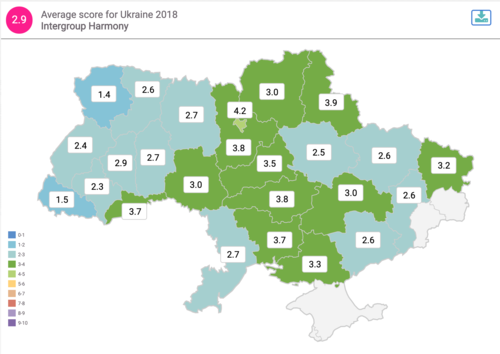
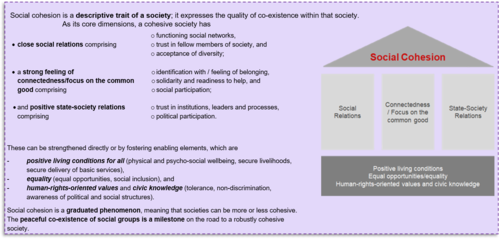
Focusing on the local community level, this study draws on representative survey data to examine how Ukrainians perceive social cohesion on the basis of objective and subjective criteria. Building on Chan et al.'s operationalisation of social cohesion, we use factor analysis to identify four dimensions of social cohesion: social engagement, connectedness, civic participation and intergroup concordance. Although we find no differences in assessments between the various regions of the country, social cohesion appears stronger in voluntarily formed amalgamated territorial communities compared to other territorial units. We discuss how and why Ukraine differs from other societies as to social cohesion features.


Explore the hub further

Concept