Gradual, cooperative, coordinated: effective support for peace and democracy in conflict-affected states
Key facts
Identity/feeling of belonging
Participation
Cooperation
Kenya
Kyrgyzstan
Nepal
Senegal
Timor-Leste
Political institutions & governance
Summary
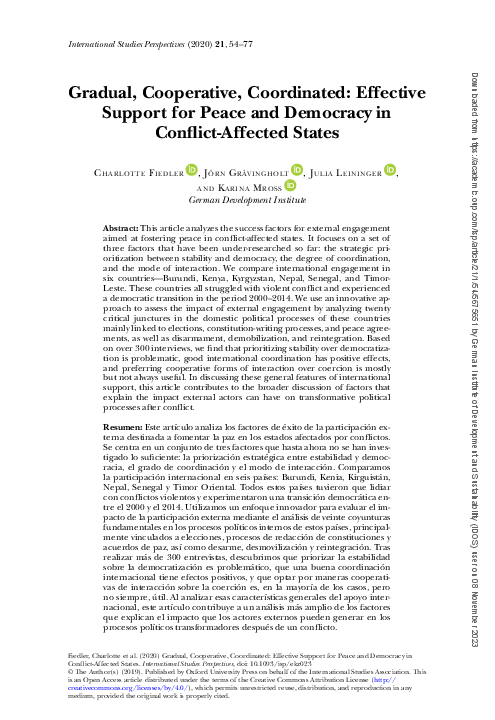
This article analyzes the success factors for external engagement aimed at fostering peace in conflict-affected states. It focuses on a set of three factors that have been under-researched so far: the strategic prioritization between stability and democracy, the degree of coordination, and the mode of interaction. We compare international engagement in six countries—Burundi, Kenya, Kyrgyzstan, Nepal, Senegal, and Timor-Leste. These countries all struggled with violent conflict and experienced a democratic transition in the period 2000–2014. We use an innovative approach to assess the impact of external engagement by analyzing twenty critical junctures in the domestic political processes of these countries mainly linked to elections, constitution-writing processes, and peace agreements, as well as disarmament, demobilization, and reintegration. Based on over 300 interviews, we find that prioritizing stability over democratization is problematic, good international coordination has positive effects, and preferring cooperative forms of interaction over coercion is mostly but not always useful. In discussing these general features of international support, this article contributes to the broader discussion of factors that explain the impact external actors can have on transformative political processes after conflict.


Explore the hub further